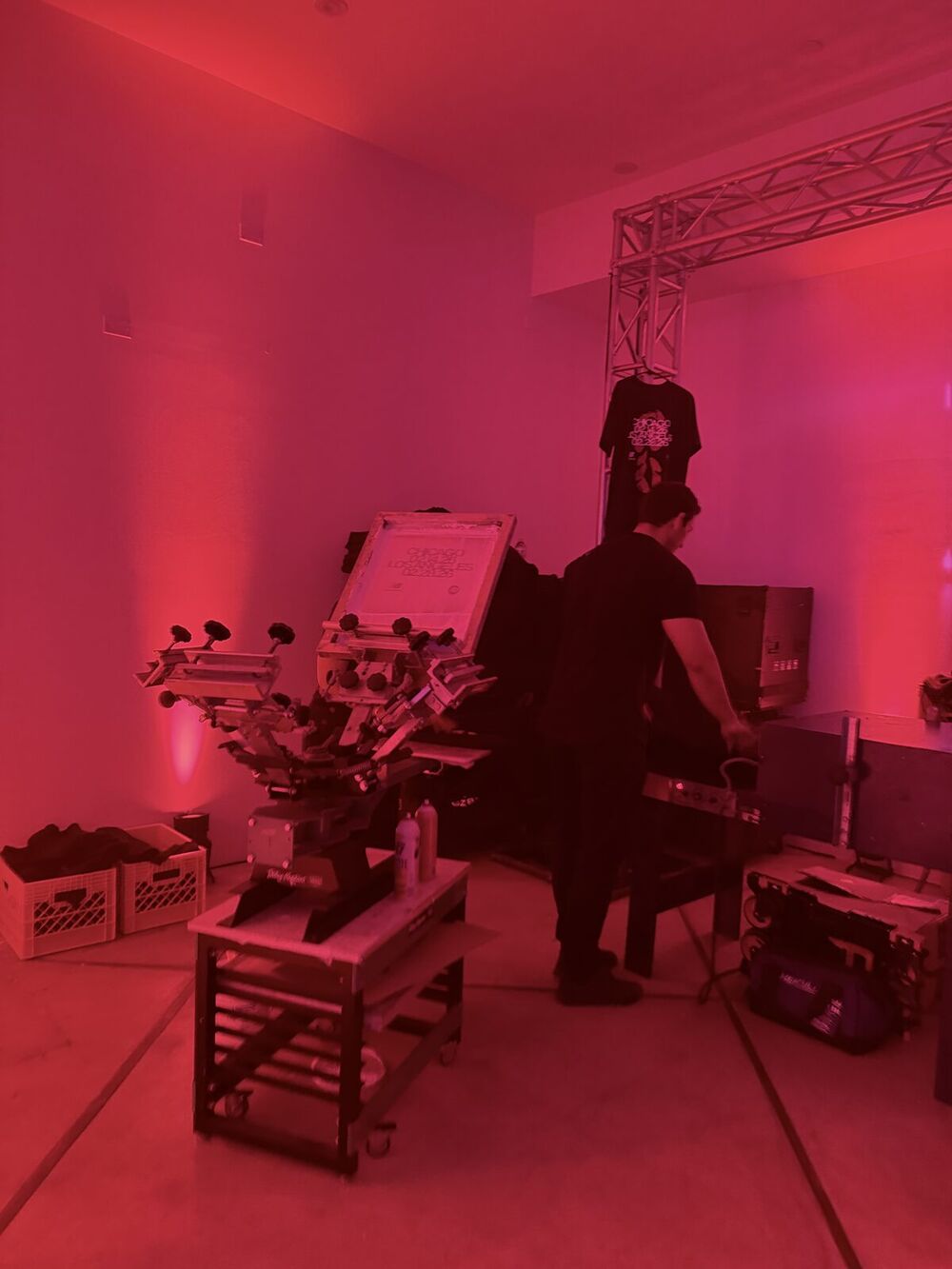
Orange County school and university event live printing looks like every other activation right up until the purchasing conversation starts. Then it turns into a different animal — trademark approvals, insurance certificates, vendor registration numbers, and a student government treasurer who needs three quotes before anything happens.
The printing is the easy part. What follows is the campus-specific version: who is actually buying, what has to be approved, and when the calendar gets crowded.
A K-12 booster is not a university department
Almost every campus job falls into one of two buying patterns, and they behave nothing alike.
K-12 and district events are usually funded by ASB accounts, booster clubs or PTA budgets. The money is small, real, and scrutinised. Decisions come from a committee, purchase orders move through a district office, and campus access during school hours may require background clearance for the crew. Volumes are moderate — a few hundred pieces at a rally, a spirit night or an eighth-grade promotion.
University events are fragmented across dozens of independent buyers: student affairs, athletics, admissions, alumni relations, individual colleges, Greek chapters, and the student government. Each has its own budget and its own approval path, and they frequently do not know what the others are booking. Volumes are larger and the deadlines are tighter, because student organisations plan on a student timeline.
Knowing which one you are before you ask for a quote saves a fortnight. The pricing page is the fastest way to get a defensible number in front of a committee.
Get the artwork approved before you get excited about it
This is the step that kills campus events, and it is entirely avoidable.
Institutional marks — the seal, the athletics logo, the official wordmark, the mascot — are trademarks. If the school runs a licensing program, production has to go through an approved path and the artwork has to be signed off before anything is decorated. That approval is a queue. It does not accelerate because your rally is on Friday.
Three practical moves. First, ask the licensing or trademark office what the approval turnaround actually is, in business days, and work backwards from it. Second, design an event-specific graphic that does not lean on the protected marks — club identity, class year, a student-drawn illustration, the event name in a strong type treatment. It approves faster and, honestly, students prefer it. Third, lock artwork about 10 business days before the event regardless, so files can be prepped and a test piece run.
If custom patches are part of the plan for a hat bar, add roughly three weeks of lead time for those on top of everything else.
Start the vendor file the day you start planning
Campuses buy through systems. Expect to need a W-9, a certificate of insurance naming the district or university as additional insured with the right limits, and registration in a purchasing or vendor portal. K-12 sites frequently require background clearance for adults on campus during instructional hours, and some districts require a facilities use form even for their own events.
None of it is hard. All of it is slow. The failure mode is a fully planned event that cannot issue a purchase order four days out because the insurance certificate names the wrong entity. Ask for the exact certificate holder wording in writing at the start, then it is done.
Where the station goes, and what it needs there
The best campus locations are the ones with forced foot traffic and a place to queue that is not a walkway: the quad at midday, the concourse outside a gym before a game, the plaza between residence halls at move-in, a courtyard next to the check-in table at an admissions event.
The constraint is almost always power. Each heat press wants its own dedicated 20-amp circuit, and outdoor campus quads are famously short on those. Facilities can usually solve it with advance notice; they cannot solve it on the morning. Ask how many dedicated circuits terminate at the location and how far the run is. If the answer is none, either move the station toward a building or plan a properly sized generator.
Because Merch Troop is based in Fullerton, Orange County dates do not carry a travel fee, which makes short-notice campus jobs in Irvine, Fullerton, Costa Mesa and the beach cities considerably easier to say yes to than they would be from out of area. Our post on where to host an activation in Orange County covers venue selection more broadly.
The weeks everyone wants
Campus demand is not evenly distributed. It clusters hard around welcome week and move-in, homecoming, admitted students days in spring, Greek recruitment, the athletics home schedule, senior and grad events in May and June, and any single day the whole district calls spirit day. Those are the dates when every department wants the same Thursday afternoon.
Book four to eight weeks out as a baseline and earlier for the peaks. And be realistic about method against volume: a DTF or heat-press station finishes 60 to 90 pieces per hour, a hat bar runs 30 to 45 hats per hour per press, and live embroidery takes 6 to 12 minutes a piece. If 800 students are walking past your quad table in a ninety-minute lunch block, embroidery is the wrong choice no matter how good it looks — run presses for the crowd, and keep the slower, premium method for a donor reception or a small awards night. The method comparison has the full breakdown.
Frequently asked questions
Do you need a licence to print a university logo?
If the institution runs a trademark licensing program, then yes, the marks are controlled and artwork has to be approved through that office before anything is produced. Ask your campus licensing or trademark contact early, because approval is a queue and it does not move faster because your event is next week. Department wordmarks, club art and student-designed graphics usually have a lighter path.
What paperwork does a school usually require from a vendor?
Typically a W-9, a certificate of insurance naming the district or university as additional insured, and registration in their vendor or purchasing system. K-12 districts may also require background clearance for anyone working on campus during school hours. None of it is difficult, but it takes weeks, so start it when you start planning.
When should an Orange County campus event be booked?
Four to eight weeks out for most dates, and earlier for the peak weeks. Welcome week, homecoming, admitted students day and the end-of-year run are the dates where every department on campus wants the same Thursday. Artwork should lock about 10 business days ahead, and custom patches need roughly three weeks on their own.
Talk to a local crew
Tell us the campus, the date, the expected foot traffic and who is issuing the purchase order, and we will send a quote your committee can approve. No travel fee anywhere in Orange County. Request a free quote or call (562) 614-4800.